
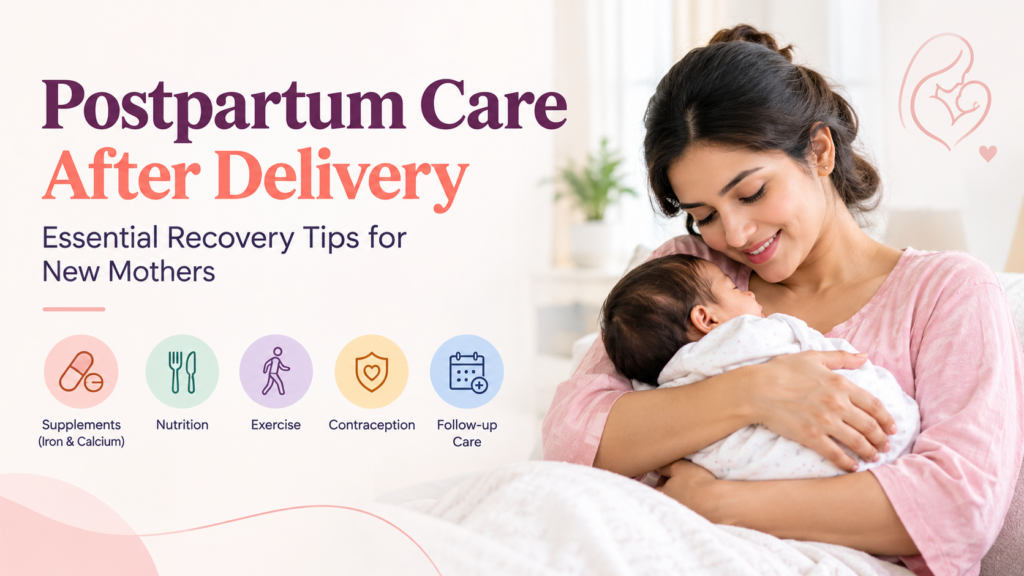
Postpartum Care After Delivery: Essential Recovery Tips for New Mothers
After delivery, your body needs time, nutrition, rest, and proper medical care to recover from pregnancy and childbirth. As a Best Gynecologist in Ravet, I advise new mothers to continue taking care of their health just as carefully as they did during pregnancy. Whether you have had a normal delivery or a cesarean birth, postpartum recovery should include appropriate supplements, a balanced diet, gradual physical activity, and timely follow-up. Why Is Postpartum Care Important After Delivery? Childbirth brings several physical changes to the body. During pregnancy and delivery, the body uses important nutrients, and some women may also experience blood loss during childbirth. After delivery, our focus is to support recovery and replenish nutrients according to individual needs. Postpartum care is also important for monitoring healing, breastfeeding-related nutritional needs, emotional well-being, and any concerns related to the delivery. A proper Obstetrician in Ravet can assess your recovery and guide you regarding supplements, activity, contraception, and follow-up care based on your individual condition. Essential Supplements After Delivery Importance of Iron Supplements Iron is particularly important after childbirth, especially when there has been significant blood loss or when iron levels were low during pregnancy. In many cases, iron supplementation may be continued for around three months, but the exact duration should depend on your blood reports and your doctor’s recommendation. Taking the prescribed iron supplement regularly can help support recovery and maintain healthy iron levels. Calcium and Vitamin D After Delivery Calcium remains important after delivery, particularly for mothers who are breastfeeding. Vitamin D also plays an important role in maintaining healthy bones and supporting calcium absorption. Some mothers experience back or body discomfort after delivery. Nutritional deficiencies, including calcium or vitamin D deficiency, can sometimes contribute to such symptoms, so supplementation may be recommended when appropriate. Postpartum Care in Ravet should include an assessment of nutritional needs rather than taking supplements without medical advice. Why Should Supplements Be Taken as Advised? Iron, calcium, vitamin D, and other supplements should be taken according to your doctor’s recommendation. The required dose and duration can differ depending on your pregnancy history, delivery-related blood loss, diet, breastfeeding status, and laboratory results. What Should You Eat After Delivery? There is generally no need for unnecessary food restrictions after childbirth. A new mother should focus on a varied, nutritious diet that supports recovery and breastfeeding when applicable. Maintain a Balanced and Nutritious Diet Your daily meals can include: Fresh fruits and vegetables Whole grains and cereals Pulses, beans, and other protein sources Milk and dairy products when suitable Nuts and seeds Adequate fluids and water Iron- and calcium-rich foods A balanced diet helps support energy levels and overall recovery. Foods to Limit During Recovery You do not need to avoid normal home-cooked foods without a medical reason. However, it is sensible to limit excessively spicy, oily, and heavily processed foods, particularly if they cause digestive discomfort. The focus should be on nutritious meals rather than unnecessary dietary restrictions. When Can You Resume Physical Activity After Delivery? Your body needs time to heal after childbirth. Physical activity should therefore be resumed gradually rather than immediately returning to your previous workout routine. Gradual Return to Exercise For many women, normal workouts and more structured exercise can be resumed around six to eight weeks after delivery, provided recovery is progressing normally and the doctor has given clearance. You can gradually increase your activity according to your comfort, delivery type, healing, and overall health. Post Delivery Care in Ravet may include personalized guidance on when and how to return to exercise safely. When Should Exercise Be Delayed? Exercise should be postponed and medical advice should be sought if you experience symptoms such as: Heavy or unusual bleeding Increasing pain Fever Problems with stitches or wound healing Severe weakness or dizziness Any new or concerning symptoms The timing of exercise should always be individualized, particularly after a cesarean delivery or when complications have occurred. When Can Sexual Activity Be Resumed After Delivery? Sexual activity should not be resumed immediately after childbirth because the body needs adequate time to heal. In general, I advise waiting around six to eight weeks and ensuring that healing is progressing normally before resuming sexual activity. The exact timing can vary depending on the type of delivery, stitches, pain, bleeding, and individual recovery. Emotional readiness is also important. If there is persistent pain or discomfort, it is better to discuss it during a postpartum consultation rather than ignoring the symptoms. Postpartum Contraception and Birth Spacing Another important part of postpartum care is contraception. Pregnancy can occur again relatively soon after childbirth, even before menstrual cycles become regular. Why Is Contraception Important After Delivery? Spacing pregnancies gives the body time to recover and allows parents to plan their next pregnancy according to their health and family circumstances. At the postpartum follow-up, I discuss suitable contraceptive options based on factors such as breastfeeding, medical history, and future pregnancy plans. Contraceptive Options After Delivery Depending on individual circumstances, options may include: Condoms and other barrier methods Oral contraceptive methods Intrauterine devices Long-acting reversible contraception Other medically appropriate methods The right option should be selected after discussing your health and reproductive plans with your doctor. Importance of the Postpartum Follow-Up Visit A postpartum follow-up is an important part of recovery. I generally recommend a review around six to eight weeks after delivery, although the timing may be different depending on your individual situation. During this visit, we can assess: Recovery after childbirth Healing of stitches or surgical wounds Bleeding and menstrual changes Breastfeeding-related concerns Nutritional requirements Physical discomfort Contraceptive needs Plans for future pregnancy A Postpartum Checkup in Ravet can also provide an opportunity to discuss symptoms that may have appeared after returning home from the hospital. Common Postpartum Concerns New Mothers Should Not Ignore Some changes are expected after childbirth, but certain symptoms require prompt medical attention. Contact your doctor if you experience: Very heavy bleeding Persistent fever Severe or increasing abdominal pain Foul-smelling discharge Problems with stitches or the